
The Commercialization of Low Earth Orbit and Space Debris Management
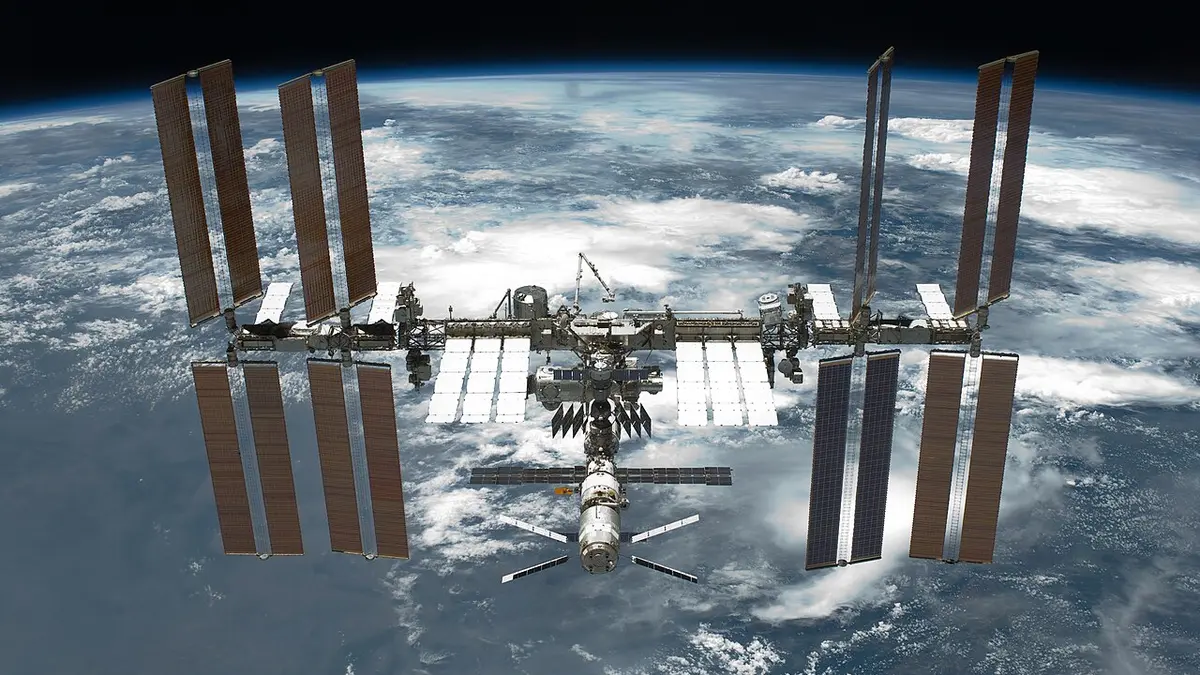
As orbital services expand, keeping useful orbits safe becomes a shared responsibility.
The Beginning
The night sky can seem far removed from everyday infrastructure. Yet spacecraft support communications, observation and scientific work that people depend on. Low Earth Orbit, broadly the region below about 2,000 kilometres, is part of that infrastructure. It should not be confused with the whole satellite system: navigation and other services also use higher orbits. The important shift is that near-Earth space is increasingly a working environment whose usefulness depends on how it is managed.
The Evolution
Commercial satellite constellations are expanding alongside public space programmes. ESA’s 2025 Space Environment Report, using data through the end of 2024, describes increasing constellation activity and crowded altitude bands. Some satellites provide communications; others observe Earth for different applications. Their services are not interchangeable, and an internet connection or weather forecast should not automatically be described as dependent on a particular low-orbit network. Still, the broader connection is clear: decisions made in orbit increasingly affect services used on the ground.
The Friction
Space debris includes inactive spacecraft, rocket bodies and fragments. A launch does not automatically shatter objects into thousands of pieces. Fragmentation can result from collisions, explosions or other break-up events, and high relative speeds make even small objects hazardous. ESA warns that collisions and fragmentation can add debris faster than natural re-entry removes it. The associated cascading-risk problem is often called Kessler syndrome; it is not a prediction that all space becomes inaccessible overnight. Risk varies by orbit and can persist over long periods.
The Conclusion
The response needs prevention as well as removal. Avoiding new debris, coordinating traffic, safely managing stored energy and planning end-of-life disposal all matter. ESA also examines active removal of selected objects as part of long-term debris control. Removal is technically demanding and cannot be presented as an established, universal clean-up service. Nor should atmospheric re-entry be described as automatically harmless. For readers, the central question is one of stewardship: who benefits from orbital access, who carries the risks, and how are responsibilities maintained after a spacecraft stops earning revenue? Sustainable access requires attention throughout a mission’s life.
Sources & editorial note
The cited environment report describes data through the end of 2024. Removal concepts are not presented as universally operational or risk-free.
Prepared with AI-assisted research and writing. Sources support the attributed factual statements; explanatory framing and practical suggestions are Dishantra’s interpretation. No independent expert review is claimed. Editorial standards · Corrections & support
From insight to action
Dishantra also offers practical resources and decision tools.
Choose the next step that is useful to you—without interrupting the article you just finished.