
Decoding BRICS: Global Responsibilities and India’s 2026 Chairship
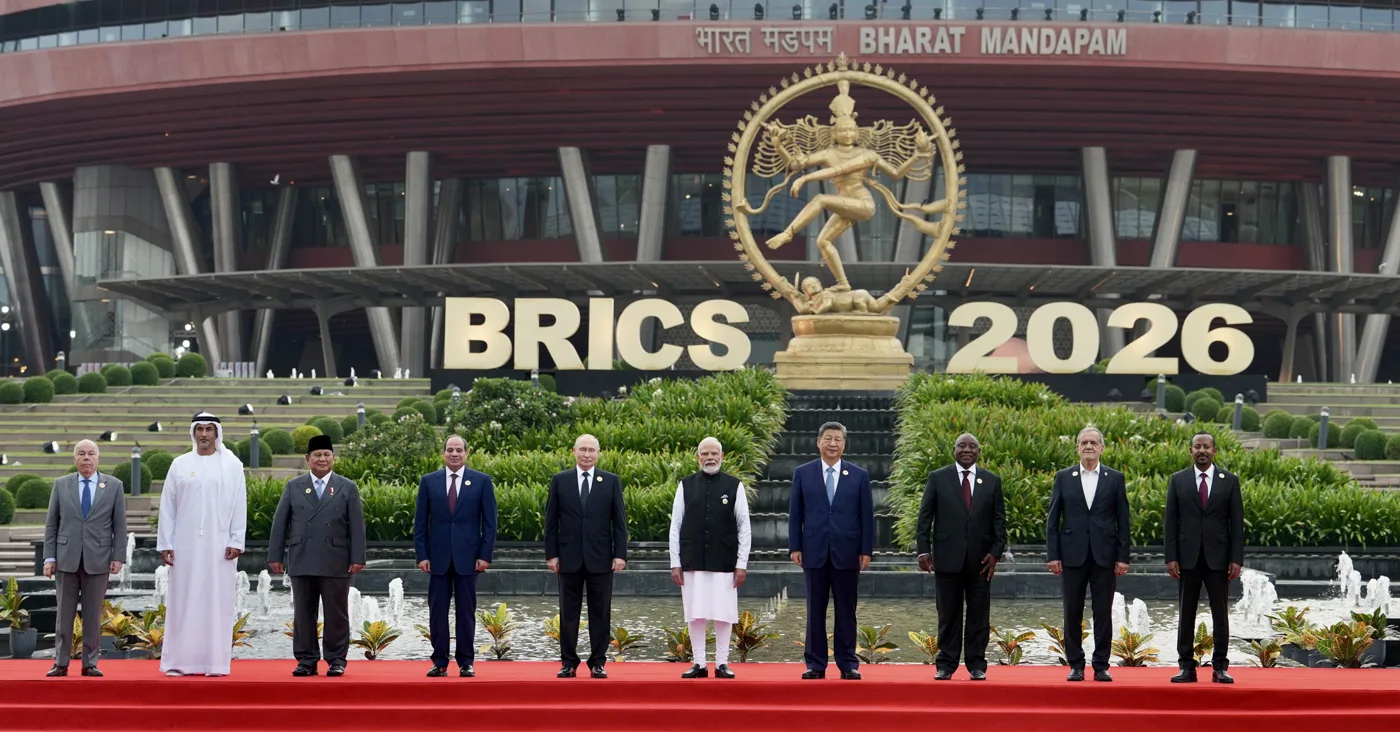
How a wider grouping works, why its members seek reform, and how to read summit promises critically.
Source trail: PIB backgrounder · New Development Bank · New Delhi Declaration · Times of India summit report
The Beginning
BRICS brings together governments seeking greater influence in international cooperation. It is a forum for coordination, not a supranational government or a military alliance. Reading it as a single actor can obscure disagreements among its members. Its significance lies partly in the questions it puts on the agenda: representation, development finance and the terms on which countries participate in global trade.
The Evolution
The BRIC acronym dates to 2001. Political cooperation began in 2006, before the global financial crisis; the first leaders’ summit followed in 2009. South Africa participated in the expanded grouping in 2011. The crisis strengthened calls for financial reform, but cannot explain the entire origin of a process already underway. PIB’s September 2026 backgrounder lists eleven members and distinguishes them from partner countries.
How leadership works
The chairship rotates annually. The chair coordinates the summit and working meetings and sets priorities. PIB notes that a new rotation formula is being discussed following expansion. An annual rotation should therefore not be interpreted as a permanently settled equal-turn formula for every new member, or a mechanism that eliminates political disagreements.
Different forums, overlapping interests
BRICS, the G7 and the G20 serve different constituencies, with overlapping membership and interests. A country can pursue cooperation in more than one forum. A useful comparison asks which issue is being addressed, who participates and how commitments will be implemented. Group size alone does not show whether an agreement will change trade, public services or investment.
Development finance and responsibilities
The New Development Bank describes its purpose as mobilising resources for infrastructure and sustainable development in BRICS and other emerging and developing economies. Established in 2015, it provides a concrete institution to examine alongside summit language. BRICS membership and bank membership should not be treated as interchangeable. Readers can ask which projects receive funding, what outcomes are reported and how risks are managed. Counter-terrorism or energy declarations likewise require implementation through the relevant institutions; the forum does not itself enforce every national policy.
Dollar friction and competing interpretations
Debates about local-currency settlement are often presented as a contest over the dollar. Several distinct propositions need separating: settling a transaction in a national currency, connecting payment systems, changing reserve holdings and creating a common currency. Evidence for one does not establish the others. Claims that external pressure has unified BRICS also need evidence: members may respond differently because their economic relationships and priorities differ. This article does not reproduce an unverified tariff quotation or treat political threats as implemented policy.
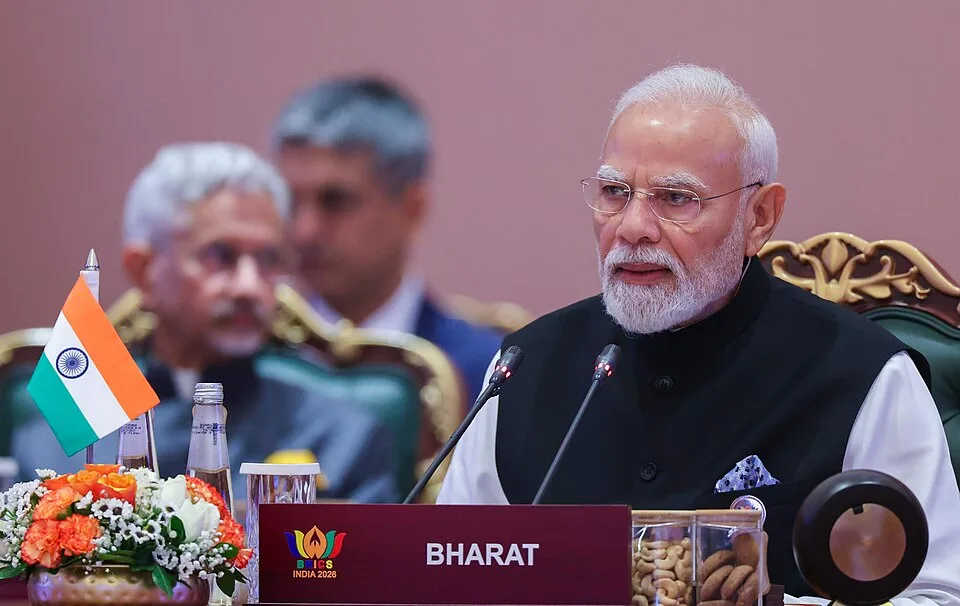
India’s 2026 chairship
PIB announced the eighteenth summit for New Delhi on 12–13 September 2026, under a theme centred on resilience, innovation, cooperation and sustainability. The summit concluded in New Delhi, and the New Delhi Declaration was published on 12 September 2026. The declaration is now the primary reference for agreed summit language; commentary and secondary reporting should be checked against that text before being presented as an adopted outcome.
What to watch next
For each reported outcome, look for an agreed document, a responsible institution, a timetable and evidence of delivery. Ask whether a measure is binding, voluntary, funded or still proposed. India’s engagement across different international forums can be understood as maintaining several relationships at once; that interpretation should not substitute for evidence about any particular bilateral negotiation. BRICS’ future influence will depend on implementation and its members’ ability to manage differences. A larger platform creates opportunities, but does not guarantee a stable or irreversible geopolitical outcome.
Sources & editorial note
- PIB: BRICS backgrounder, 10 September 2026 — primary source for chronology, membership, rotation and chairship.
- New Development Bank: About NDB — primary institutional source for the bank’s purpose.
- Times of India: summit preparations — secondary reporting context, not evidence of a final declaration.
- Official BRICS 2026 documents portal — primary index for the declaration and chairship documents.
This article is an original Dishantra synthesis. Sources are used to support the factual baseline; their wording, reporting structure and expressive passages are not reproduced. Specific summit claims are attributed to the published declaration or identified as analysis. GDP percentages require a stated measurement basis, and political or tariff quotations require a traceable source.
Prepared with AI-assisted research and writing. Sources support the attributed factual statements; explanatory framing and practical suggestions are Dishantra’s interpretation. No independent expert review is claimed. Editorial standards · Corrections & support
From insight to action
Dishantra also offers practical resources and decision tools.
Choose the next step that is useful to you—without interrupting the article you just finished.