
UPSC Current Affairs | Beyond the Headlines
India’s Act East Policy: What the 2026 ASEAN Summit Delivered
What the 2026 ASEAN–India Summit proposed and what it means for India’s Act East Policy.
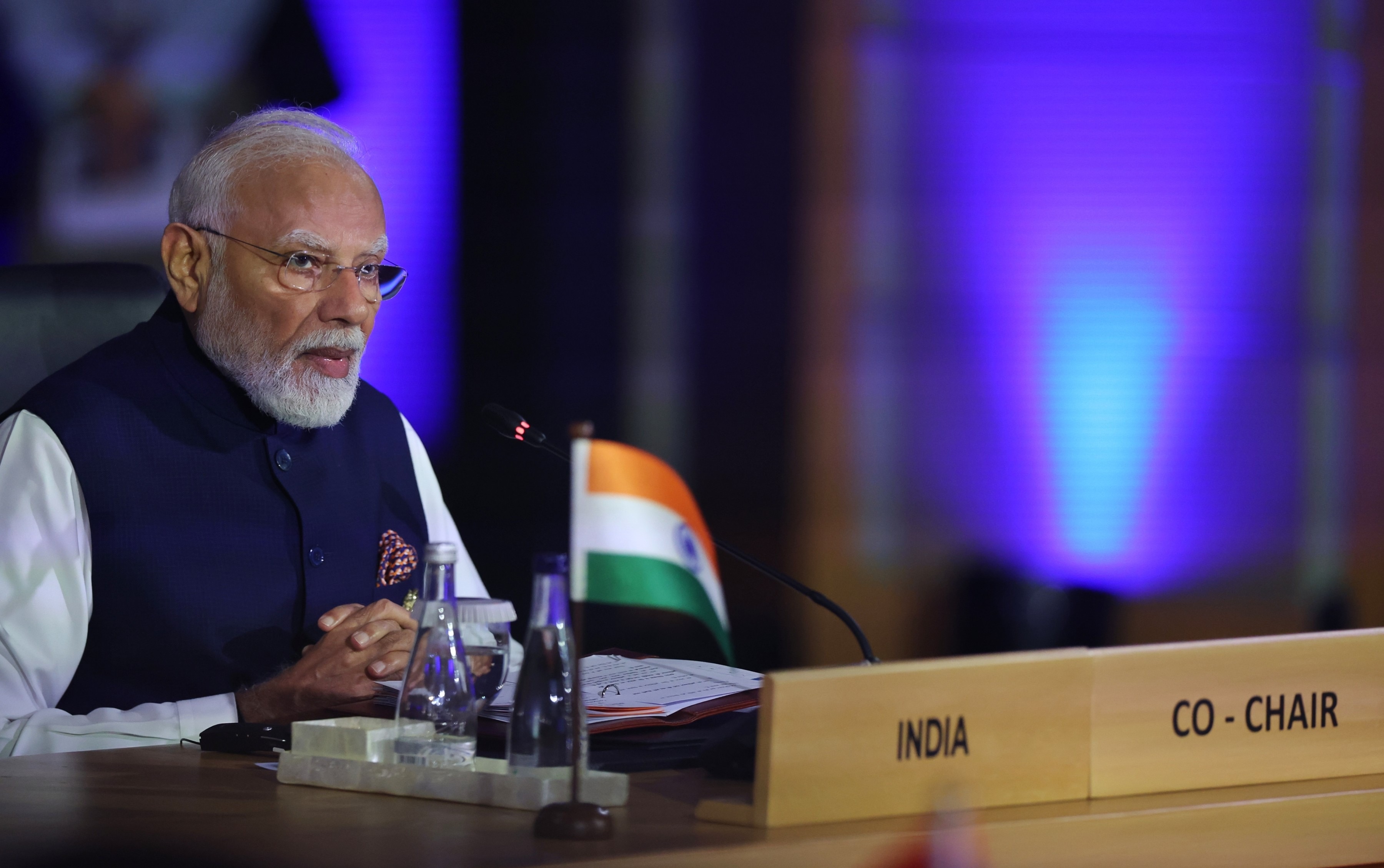
Photo credit: Prime Minister’s Office, Government of India, via Press Information Bureau (PIB). Photo ID 220349. Verify the individual image’s reuse status before public deployment.
Event: 23rd ASEAN–India Summit · Date: 17 November 2026 · Venue: Manila, Philippines · India’s representative: Prime Minister Narendra Modi.
1. Manila 2026: A New Set of Priorities for India’s Act East Policy
The 23rd ASEAN–India Summit in Manila on 17 November 2026 provided India with an opportunity to give fresh momentum to its engagement with Southeast Asia. Prime Minister Narendra Modi used the meeting to propose a broad set of initiatives spanning maritime cooperation, cyber forensics, nuclear energy, space technology, critical minerals, education, youth engagement, creative industries, and tourism.The proposals reflect a significant feature of India's contemporary engagement with ASEAN: the relationship is expanding beyond traditional diplomacy and trade into areas that will shape the region's future economic and strategic capabilities.The official outcomes list records the following India–ASEAN initiatives:A long-term ASEAN–India Maritime Cooperation Plan.A Joint Cyber Forensics Training Programme.ASEAN–India Nuclear Energy Technical Exchanges.An ASEAN–India Space Hackathon.Cooperation on mining and critical minerals.ASEAN–India Youth Connect, including a Youth Summit, Young Parliamentarian Exchanges, and Start-up Hackathons.Enhanced scholarships for ASEAN countries at Nalanda University.An ASEAN–India Creative Partnership Pavilion at WAVES 2027.Free e-visas for tourists from ASEAN countries.The leaders also adopted the ASEAN–India Joint Statement on Cooperation in Disaster Management. These developments should be distinguished from the separate announcements made by India at the 21st East Asia Summit, which included a Seafarers’ Safety Initiative, a cybercrime conference, a maritime heritage festival, and a university conclave. Those are East Asia Summit initiatives, not ASEAN–India outcomes.The central question is therefore not simply what India announced in Manila, but how these initiatives could advance the objectives of the Act East Policy, strengthen India's strategic position in Southeast Asia, and create practical benefits for both sides. (Official outcomes: PMO and PIB)
2. From Look East to Act East: How India’s Southeast Asia Policy Evolved
India's engagement with Southeast Asia has undergone a gradual transformation over more than three decades.2.1 Look East Policy: The Economic Opening of the 1990sIndia launched the Look East Policy in the early 1990s, at a time when the country was undertaking major economic reforms and seeking stronger links with the rapidly growing economies of East and Southeast Asia.The policy was initially driven by economic considerations:Expanding trade and investment.Building commercial links with ASEAN economies.Connecting India with Asian production and manufacturing networks.Strengthening diplomatic engagement with Southeast Asian countries.Re-establishing historical and cultural connections.India became a Sectoral Dialogue Partner of ASEAN in 1992, a full Dialogue Partner in 1996, and a Summit-level Partner in 20
The relationship was subsequently elevated to a Strategic Partnership in 2012.2.2 Act East Policy: A Broader Strategic ApproachIn 2014, India upgraded the Look East Policy to the Act East Policy at the 12th ASEAN–India Summit in Nay Pyi Taw, Myanmar. This shift reflected a more proactive and pragmatic approach to India's extended neighbourhood in the Indo-Pacific, broadening engagement beyond commercial relations to include:Political and strategic cooperation.Defence and maritime security.Physical and digital connectivity.Economic integration and investment.Cultural and educational exchanges.People-to-people relationships.ASEAN stands at the core of this policy. India also engages with the region through the East Asia Summit, ASEAN Regional Forum, ASEAN Defence Ministers’ Meeting Plus, and other ASEAN-led mechanisms. The Ministry of External Affairs describes connectivity in its broadest sense—physical, digital, economic, and people-to-people movement—as central to the Act East approach.2.3 The Comprehensive Strategic PartnershipIndia and ASEAN elevated their relationship to a Comprehensive Strategic Partnership in 2022, reflecting the widening scope of cooperation. The 2024 ASEAN–India joint statement reaffirmed ASEAN centrality, the ASEAN Outlook on the Indo-Pacific, and the importance of strengthening cooperation across political-security, economic, and socio-cultural areas.2.4 Why 2026–27 Is an Important PeriodIndia and ASEAN designated 2026 as the ASEAN–India Year of Maritime Cooperation. Furthermore, 2027 will mark:35 years of ASEAN–India Dialogue Relations.Five years of the ASEAN–India Comprehensive Strategic Partnership.The Manila summit therefore offered a critical window to move from broad strategic commitments towards focused cooperation in maritime security, technology, economic resilience, and human capital.
3. The Maritime Cooperation Plan: The Strategic Core of the Manila Proposals
The proposed long-term ASEAN–India Maritime Cooperation Plan is one of the most strategically significant announcements from the summit, covering six connected pillars:Connectivity.Scientific research.Disaster management.Coast Guard cooperation.Maritime domain awareness.Seafarers’ security.3.1 Why Maritime Cooperation MattersThe Indian Ocean and the western Pacific are connected through major sea lanes that carry energy supplies, manufactured goods, raw materials, and commercial traffic. India and ASEAN share profound convergence in ensuring safe trade, protecting seafarers, preventing piracy, executing search and rescue missions, and safeguarding critical marine resources.3.2 Maritime Domain Awareness (MDA)Maritime Domain Awareness refers to the effective understanding of activities in the maritime domain that impact security, safety, the economy, or the environment. While satellite monitoring and information-sharing can improve regional responses, an announcement of a cooperation plan must not be confused with an operational, integrated surveillance network, which requires compatible systems and trusted information-sharing pacts.3.3 Coast Guard Cooperation and Seafarers’ SecurityCoast Guards perform vital roles in maritime law enforcement, search and rescue, and pollution response. Greater cooperation enhances non-traditional threat mitigation, while protecting seafarers directly supports global supply-chain reliability.3.4 What Must Happen Next?The strategic value of the plan depends entirely on implementation steps, including defining institutional coordination mechanisms, establishing regular Coast Guard interactions, expanding joint capacity-building, and setting measurable milestones.
4. Cyber Forensics: Taking Security Cooperation into the Digital Domain
The summit proposed a Joint Cyber Forensics Training Programme to strengthen regional capacity against borderless cybercrime, online fraud, financial scams, and ransomware.What Is Cyber Forensics? The identification, collection, preservation, analysis, and legal presentation of digital evidence (devices, logs, network traces) to support investigations.Regional Necessity: Because cybercrime routinely spans multiple jurisdictions, training programmes must be paired with robust legal frameworks, lawful information-sharing, and mutual legal assistance.India’s Contribution: Leveraging its expertise in digital public infrastructure (DPI) and fintech to drive regional capacity-building.
5. Nuclear Energy Technical Exchanges: A New Area of Energy Cooperation
India proposed ASEAN–India Nuclear Energy Technical Exchanges to assist Southeast Asian economies facing rising electricity demands and decarbonisation targets.Focus Areas: Nuclear safety, regulatory practices, radiation protection, human-resource development, waste management, and emergency preparedness.Strategic Caveat: This announcement is a platform for technical dialogue and capacity-building, not an agreement to construct nuclear power plants or transfer nuclear technology.
6. Space Hackathon: Building Practical Technology Partnerships
The ASEAN–India Space Hackathon connects young innovators and technical communities to leverage satellite applications for flood monitoring, agricultural assessment, disaster response, and remote connectivity. Building on ISRO’s extensive capabilities, the initiative aims to transition from one-off events into sustained joint R&D and public-service applications.
7. Critical Minerals: Connecting Act East with Economic Security
Cooperation on mining and critical minerals targets supply chains essential for electric vehicles, renewable energy, semiconductors, and advanced manufacturing.The Value-Chain Imperative: Securing raw materials is insufficient; true economic security requires processing capacity, advanced technologies, environmental safeguards, and local value addition.Responsible Mining: Partnerships must prioritize environmental impact assessments, worker safety, and local community protection.
8. Youth, Education, and People-to-People Links
To ensure enduring ties beyond government cycles, India advanced three core people-centric initiatives:ASEAN–India Youth Connect: Comprising Youth Summits, Young Parliamentarian Exchanges, and Start-up Hackathons.Nalanda University Scholarships: Enhancing higher-education opportunities for ASEAN students in public policy, Buddhist studies, and regional development.Creative Partnership Pavilion at WAVES 2027: Fostering commercial and cultural exchange across film, animation, gaming, and digital content industries.
9. Free E-Visas: Making People-to-People Connectivity Practical
The announcement of free e-visas for tourists from ASEAN countries aims to eliminate administrative barriers and boost religious, historical (e.g., Buddhist circuits), medical, and business tourism. Successful rollout will depend on clear implementation guidelines regarding eligible nationalities, duration of stay, and security protocols.
10. The Wider Strategic Context: ASEAN Centrality and India's Role
ASEAN Centrality: Supporting ASEAN as the diplomatic anchor of an inclusive, rules-based regional order rather than one dominated by exclusive blocs.Strategic Autonomy: Aligning multi-alignment with ASEAN’s own preference for strategic flexibility amid major-power rivalry.
11. What the Manila Summit Delivered — Summary Table
Initiative / ProposalStatus at the SummitNext Steps to WatchASEAN–India Joint Statement on Disaster ManagementAdopted by leadersImplementation of operational frameworksLong-term Maritime Cooperation PlanProposed by IndiaInstitutional framework design and agency alignmentJoint Cyber Forensics Training ProgrammeAnnouncedCurriculum design and participating law enforcement bodiesNuclear Energy Technical ExchangesProposedDefining technical scopes and participating institutionsASEAN–India Space HackathonProposedEvent structuring and long-term tech incubationCritical Minerals CooperationProposedEstablishing value-chain and processing partnershipsASEAN–India Youth ConnectProposedExecution of youth summits and startup exchangesNalanda University ScholarshipsProposed enhancementSlot allocations and institutional coordinationCreative Partnership Pavilion (WAVES 2027)Planned for 2027Industry participation and content collaborationFree E-Visas for ASEAN TouristsAnnouncedProcedural clarity and effective rollout dates
12. Way Forward: Making Act East More Action-Oriented
Strengthen Physical and Digital Connectivity: Prioritise land-multimodal corridors like the India–Myanmar–Thailand Trilateral Highway alongside digital public infrastructure bridges.Operationalize Maritime Plans: Translate the long-term maritime framework into active Coast Guard exercises, joint training, and search-and-rescue protocols.Move to Joint Capabilities: Back technology announcements (space, cyber forensics) with sustained institutional funding and R&D sharing.Build Resilient Supply Chains: Ensure critical-mineral agreements focus on value addition, processing, and green technologies rather than mere raw material extraction.Measure Delivery: Institute transparent review milestones to track whether diplomatic announcements translate into tangible institutional and economic outcomes.
Conclusion: From strategic intent to regional delivery
The Manila summit added practical initiatives to an already broad ASEAN–India relationship. Maritime cooperation, cyber forensics, energy dialogue, space applications, critical minerals, education and tourism reflect the changing priorities of the Indo-Pacific. Yet the summit’s lasting significance will not be determined by the length of its announcement list. It will depend on implementation, institutional continuity, economic reciprocity and benefits experienced by citizens and businesses. For India, Act East must remain more than a strategic slogan: it must connect the Northeast to Southeast Asia, strengthen ASEAN-led regional cooperation and turn shared interests into durable capabilities.
Official Sources & Further Reading
- ASEAN Secretariat — ASEAN–India Economic Relations — Official partnership timeline, trade relationship and AITIGA details. https://asean.org/our-communities/economic-community/integration-with-global-economy/asean-india-economic-relations/
- ASEAN Secretariat — Plan of Action to Implement the ASEAN–India Comprehensive Strategic Partnership (2026–2030) — Primary document for the five-year cooperation framework and its implementation priorities. https://asean.org/wp-content/uploads/2025/07/Final-POA-to-Implement-ASEAN-India-CSP-2026-2030.pdf
- Press Information Bureau — India–ASEAN trade reaches US$128.38 billion in 2025–26 — Official trade data and status of the AITIGA review, 24 September 2026. https://www.pib.gov.in/PressReleaseIframePage.aspx?PRID=2314556&lang=1®=3
- ASEAN Secretariat — ASEAN–India priority areas of cooperation — AITIGA, trade in services and investment agreements. https://asean.org/our-communities/economic-community/integration-with-global-economy/asean-india-economic-relations/priority-areas-of-cooperation/
- ASEAN Secretariat — India country page — Key ASEAN–India documents, summit statements and partnership framework. https://asean.org/india/
- ASEAN Secretariat — ASEAN and India reinforce Comprehensive Strategic Partnership priorities — Confirms adoption of the 2026–2030 Plan of Action and 2026 as its first implementation year. https://asean.org/the-26th-meeting-of-asean-india-joint-cooperation-committee-convenes-at-asean-headquarters-asean-secretariat/
- Press Information Bureau — AITIGA review negotiations — Official update on the review process and negotiating workstreams. https://www.pib.gov.in/PressReleasePage.aspx?PRID=2282336&lang=1®=22
- ASEAN Secretariat — ASEAN–India Joint Statements and summit documents — Reference point for official political and strategic declarations. https://asean.org/india/
- Government of India / PMO — 23rd ASEAN–India Summit outcomes, Manila, 17 November 2026 — Primary record of the summit proposals and adopted disaster-management statement. https://www.pmindia.gov.in/
- Government of India / PIB — ASEAN–India summit outcomes, 17 November 2026 — Official outcome list; use to verify the status and wording of each initiative. https://pib.gov.in/
Editorial verification note: The article distinguishes the adopted ASEAN–India Joint Statement on Cooperation in Disaster Management from initiatives announced or proposed for future implementation. It also keeps the East Asia Summit initiatives separate. Before publication, confirm the latest implementation notices for free e-visas, scholarship numbers and programme schedules; do not imply that operational details exist where no official details have yet been published.
UPSC Preparation Corner
A separate study resource | Linked to GS Paper II and GS Paper III
This section is designed to help aspirants move from factual recall to analytical use of the Act East–ASEAN relationship in Prelims, Mains and essay answers.
A. Prelims: High-yield facts and institutional map
- ASEAN was established in 1967 through the Bangkok Declaration. Its founding members were Indonesia, Malaysia, the Philippines, Singapore and Thailand.
- ASEAN has 11 members following Timor-Leste’s admission in 2025: Brunei Darussalam, Cambodia, Indonesia, Lao PDR, Malaysia, Myanmar, the Philippines, Singapore, Thailand, Timor-Leste and Viet Nam.
- India became an ASEAN Sectoral Dialogue Partner in 1992 and a Full Dialogue Partner in 1995; Summit-level Partnership followed in 2002.
- India–ASEAN Strategic Partnership: 2012; Comprehensive Strategic Partnership: 2022.
- Act East Policy was announced in 2014, building on the Look East Policy launched in the early 1990s.
- AITIGA was signed on 13 August 2009 and entered into force on 1 January 2010. Its review is ongoing.
- ASEAN–India Trade in Services Agreement and Investment Agreement were signed in 2014 and entered into force on 1 July 2015.
- ASEAN–India trade in FY2025–26: US$128.38 billion; ASEAN share of India’s global trade: 10.55 per cent.
- The ASEAN–India Plan of Action 2026–2030 is the five-year implementation framework for the Comprehensive Strategic Partnership.
- ASEAN-led regional mechanisms include the East Asia Summit, ASEAN Regional Forum and ASEAN Defence Ministers’ Meeting-Plus.
- UNCLOS provides the international legal framework for the law of the sea; maritime cooperation should be discussed consistently with international law.
- IUU fishing means illegal, unreported and unregulated fishing.
B. Concepts and terms aspirants should be able to explain
This glossary brings together the key policy, institutional and economic terms used in the article, with concise meanings and their relevance to India’s Act East engagement.
| Term | Meaning and relevance |
|---|---|
| Act East Policy | India’s proactive engagement with Southeast Asia and the wider Indo-Pacific through economic, strategic, connectivity and people-to-people cooperation. |
| ASEAN centrality | ASEAN’s convening and agenda-shaping role in the regional institutional architecture. |
| ASEAN Outlook on the Indo-Pacific (AOIP) | An ASEAN framework emphasising openness, inclusivity, dialogue, cooperation and respect for international law. |
| Comprehensive Strategic Partnership | The broad framework guiding ASEAN–India cooperation across political-security, economic and socio-cultural pillars. |
| AITIGA | ASEAN–India Trade in Goods Agreement; a preferential trade framework signed in 2009 and in force from 2010. |
| Maritime Domain Awareness | Understanding activities at sea that may affect security, safety, the economy or the environment. |
| IUU fishing | Illegal, unreported and unregulated fishing, which undermines marine ecosystems, lawful livelihoods and resource governance. |
| Digital public infrastructure | Shared digital systems and rails that enable identity, payments or data exchange; distinct from cyber forensics. |
| Strategic autonomy | The ability to make independent foreign-policy choices while engaging in partnerships and issue-based cooperation. |
| Minilateralism | Focused cooperation among a small number of states on specific objectives, complementing rather than replacing wider multilateral forums. |
| Blue economy | Sustainable use of ocean resources for economic growth, livelihoods and ecosystem health. |
| Economic resilience | The capacity to withstand and recover from supply disruptions, external shocks and excessive dependencies. |
C. Analytical takeaways for GS Paper II and GS Paper III
The following points connect the article’s developments with broader syllabus themes, helping aspirants move from factual recall to analysis.
GS Paper II: International Relations
- ASEAN is central to India’s Act East Policy and its engagement with the Indo-Pacific.
- India’s approach combines bilateral partnerships with participation in ASEAN-led institutions; it should not be framed as choosing one bloc against another.
- The AOIP and India’s preference for an open, inclusive and rules-based Indo-Pacific create common ground, while ASEAN’s consensus-based approach can constrain collective responses to crises.
- The Comprehensive Strategic Partnership and Plan of Action 2026–2030 provide institutional continuity beyond individual summits.
- The Myanmar crisis tests ASEAN’s principles of non-interference, consensus, regional stability and humanitarian responsibility.
GS Paper III: Economy, Security, Science and Technology
- AITIGA review is relevant to trade facilitation, market access, rules of origin, non-tariff barriers and trade asymmetries.
- Critical minerals link external partnerships to clean-energy transitions, electronics, batteries and strategic manufacturing.
- Maritime cooperation links national security with trade routes, fisheries, seafarers’ safety, disaster response and environmental protection.
- Cyber forensics requires technical capacity as well as legal cooperation, evidence integrity, privacy and due process.
- Space applications and digital technologies can improve disaster management, agriculture, connectivity and public-service delivery.
- Energy cooperation must balance security, affordability, sustainability and decarbonisation.
D. Prelims practice: 12 MCQs with explanations
1. With reference to ASEAN–India relations, consider the following statements:
1. India became a Sectoral Dialogue Partner of ASEAN in 1992.
2. India became a Full Dialogue Partner in 1995.
3. The ASEAN–India Comprehensive Strategic Partnership was established in 2012.
(a) 1 and 2 only
(b) 2 and 3 only
(c) 1 and 3 only
(d) 1, 2 and 3
Answer: (a). Statements 1 and 2 are correct. The relationship became a Strategic Partnership in 2012 and a Comprehensive Strategic Partnership in 2022. Do not confuse the two milestones.
2. The ASEAN–India Trade in Goods Agreement (AITIGA):
1. Was signed in 2009.
2. Entered into force in 2010.
3. Covers trade in services as its principal subject.
(a) 1 and 2 only
(b) 2 and 3 only
(c) 1 and 3 only
(d) 1, 2 and 3
Answer: (a). AITIGA concerns trade in goods. Trade in services is covered by a separate ASEAN–India Trade in Services Agreement.
3. Which of the following is the most accurate description of ASEAN centrality?
(a) ASEAN’s role as a collective defence alliance
(b) ASEAN’s convening and agenda-shaping role in regional institutions
(c) ASEAN’s authority to enforce uniform domestic laws
(d) ASEAN’s exclusive control over all Indo-Pacific trade routes
Answer: (b). ASEAN centrality refers to ASEAN’s central role in regional architecture and dialogue, not a military alliance or supranational authority.
4. Consider the following statements about the ASEAN–India Plan of Action 2026–2030:
1. It provides a framework for implementing the Comprehensive Strategic Partnership.
2. It includes cooperation priorities beyond maritime security.
3. Every activity listed in it was newly adopted at the Manila summit.
(a) 1 only
(b) 1 and 2 only
(c) 2 and 3 only
(d) 1, 2 and 3
Answer: (b). The Plan of Action is a wider five-year framework adopted before the Manila summit. It covers multiple sectors; it should not be mistaken for a list of summit announcements.
5. Which of the following best describes Maritime Domain Awareness?
(a) A system limited to naval warfare planning
(b) Understanding maritime activities relevant to security, safety, economy and environment
(c) A legal regime for allocating fishing quotas
(d) A treaty establishing common territorial waters
Answer: (b). MDA combines information and understanding across the maritime domain. It can support law enforcement, search and rescue, safety and environmental response.
6. IUU fishing refers to fishing that is:
(a) International, unrestricted and unlicensed
(b) Illegal, unreported and unregulated
(c) Inland, underwater and unmonitored
(d) Industrial, unsustainable and unregistered
Answer: (b). IUU fishing undermines sustainable fisheries, lawful livelihoods and marine resource management.
7. Which one of the following agreements is primarily concerned with preferential trade in goods between ASEAN and India?
(a) AITIGA
(b) ASEAN–India Trade in Services Agreement
(c) ASEAN–India Investment Agreement
(d) ASEAN Outlook on the Indo-Pacific
Answer: (a). AITIGA is the goods agreement. Services and investment are addressed through separate agreements.
8. The ASEAN Outlook on the Indo-Pacific is best characterised by which of the following?
(a) An exclusive military grouping
(b) A framework stressing inclusivity, openness, dialogue and cooperation
(c) A common currency arrangement
(d) A collective sanctions mechanism
Answer: (b). AOIP emphasises inclusive cooperation and ASEAN-led regional architecture; it is not a military alliance.
9. Which of the following are ASEAN-led mechanisms in which India participates?
1. East Asia Summit
2. ASEAN Regional Forum
3. ASEAN Defence Ministers’ Meeting-Plus
(a) 1 only
(b) 1 and 2 only
(c) 2 and 3 only
(d) 1, 2 and 3
Answer: (d). All three are ASEAN-led platforms with distinct mandates and participation structures.
10. With reference to Timor-Leste, which statement is correct in the 2026 context?
(a) It is an observer and not an ASEAN member.
(b) It became ASEAN’s 11th member in 2025.
(c) It was a founding member in 1967.
(d) It joined ASEAN in 2012.
Answer: (b). Timor-Leste was admitted as ASEAN’s 11th member in 2025. Its integration into ASEAN institutions and agreements is an ongoing process.
11. Which of the following is a cyber-forensics activity?
(a) Setting tariff rates
(b) Preserving and analysing digital evidence for an investigation
(c) Negotiating maritime boundaries
(d) Issuing sovereign credit ratings
Answer: (b). Cyber forensics concerns the handling and analysis of digital evidence, including devices, logs and network traces.
12. Consider the following statements about the Manila ASEAN–India summit outcomes:
1. The Joint Statement on Cooperation in Disaster Management was adopted by leaders.
2. The East Asia Summit Seafarers’ Safety Initiative is an ASEAN–India summit outcome.
3. Free e-visas for ASEAN tourists require implementation details to determine operational scope.
(a) 1 and 3 only
(b) 1 and 2 only
(c) 2 and 3 only
(d) 1, 2 and 3
Answer: (a). Statement 2 is incorrect because the Seafarers’ Safety Initiative belongs to the separate East Asia Summit track. The e-visa announcement should not be treated as fully operational without details.
E. Mains practice questions
- “The Act East Policy has evolved from an economic outreach strategy into a multidimensional regional engagement.” Discuss with reference to India–ASEAN relations. (GS-II, 250 words)
- Examine the significance of ASEAN centrality and the ASEAN Outlook on the Indo-Pacific for India’s regional strategy. (GS-II, 150 words)
- How can India deepen maritime cooperation with ASEAN while upholding international law and strategic autonomy? (GS-II, 250 words)
- Assess the opportunities and challenges in the review of AITIGA. How can India make its trade engagement with ASEAN more balanced and mutually beneficial? (GS-III, 250 words)
- Critical minerals have become a key component of economic security. Discuss the scope for India–ASEAN cooperation in building resilient and responsible supply chains. (GS-III, 250 words)
- Cybercrime is transnational, but investigation and prosecution remain jurisdiction-bound. Examine the role of cyber-forensics cooperation and its legal challenges. (GS-III, 150 words)
- Discuss the role of the India–Myanmar–Thailand Trilateral Highway and other multimodal links in connecting India’s Northeast with Southeast Asia. (GS-III, 250 words)
- The ASEAN–India Plan of Action 2026–2030 provides an implementation framework, but outcomes depend on institutional capacity. Analyse. (GS-II, 250 words)
- How can India and ASEAN cooperate in food security, climate-resilient agriculture and the blue economy? (GS-III, 150 words)
- “Summit diplomacy must be judged by delivery rather than declarations.” Evaluate this proposition with reference to the 23rd ASEAN–India Summit. (GS-II, 250 words)
F. Model answers: four developed answer structures
The model answers below show how to organise evidence, explain significance, acknowledge limitations and present a balanced way forward.
Model Answer 1 — Act East: from economic outreach to strategic engagement (GS-II, approx. 250 words)
Introduction: India’s Look East Policy emerged in the early 1990s to reconnect the Indian economy with East and Southeast Asia. Its 2014 transformation into the Act East Policy reflected a shift from outreach to more active economic, strategic and connectivity-based engagement.
Evolution: Institutional ties deepened from Sectoral Dialogue Partnership (1992) to Full Dialogue Partnership (1995), Summit-level Partnership (2002), Strategic Partnership (2012) and Comprehensive Strategic Partnership (2022). ASEAN remains central, while India also participates in the EAS, ARF and ADMM-Plus.
Strategic dimensions: First, economic integration is supported by AITIGA and agreements on services and investment, although the goods agreement’s review highlights concerns about trade asymmetries and market access. Second, maritime cooperation supports safe sea lanes, MDA, search and rescue and seafarers’ security. Third, connectivity projects, especially links through Myanmar and Thailand, can connect the Northeast with regional markets. Fourth, new cooperation in cyber forensics, space, critical minerals and energy addresses emerging economic-security priorities. Fifth, scholarships, youth exchanges and tourism build social foundations.
Challenges: Implementation delays in connectivity, political instability in Myanmar, uneven trade outcomes, regulatory differences, limited project capacity and strategic competition constrain progress.
Way forward: India should prioritise deliverable connectivity, a balanced AITIGA review, responsible supply-chain partnerships, maritime capacity-building and institutional monitoring under the 2026–2030 Plan of Action.
Conclusion: Act East will be credible when strategic intent produces measurable economic opportunities, regional public goods and stronger links between India’s Northeast and Southeast Asia.
Model Answer 2 — Maritime cooperation, ASEAN centrality and the Indo-Pacific (GS-II, approx. 250 words)
Introduction: The Indian Ocean and western Pacific form an interconnected maritime space. India and ASEAN therefore share interests in safe navigation, resilient trade routes, maritime safety and a stable regional order.
Importance: Maritime cooperation protects commercial shipping and energy flows; improves search-and-rescue and disaster response; supports Coast Guard capacity; helps address piracy, trafficking and IUU fishing; and protects marine ecosystems. MDA can improve the ability of agencies to understand and respond to incidents.
Regional framework: The Manila long-term maritime cooperation initiative and the wider ASEAN–India Plan of Action provide avenues for connectivity, research, disaster management and Coast Guard cooperation. UNCLOS supplies the legal framework for maritime rights and responsibilities. The AOIP and ASEAN centrality provide an inclusive institutional setting.
Challenges: Maritime agencies have different capabilities and legal mandates. Information-sharing can be sensitive. Disputes, major-power rivalry, limited resources, environmental degradation and uneven enforcement complicate cooperation.
Way forward: Build practical Coast Guard exchanges, compatible incident-reporting procedures, joint search-and-rescue training, marine scientific research, pollution response and capacity-building. Cooperation should be transparent, inclusive and consistent with international law. India should support ASEAN-led platforms rather than presenting maritime engagement as an exclusive bloc.
Conclusion: A rules-based maritime order is sustained not only by declarations but by the everyday ability of regional agencies to cooperate and deliver safety and security.
Model Answer 3 — AITIGA and balanced economic integration (GS-III, approx. 250 words)
Introduction: ASEAN is a major economic partner for India. Bilateral trade reached US$128.38 billion in FY2025–26, representing 10.55 per cent of India’s global trade. The scale of this relationship makes the quality of trade rules important.
Context: AITIGA was signed in 2009 and entered into force in 2010. It created preferential tariff arrangements for goods. Separate agreements cover services and investment. The ongoing AITIGA review seeks to make the agreement more balanced, effective and trade-facilitative.
Opportunities: A well-designed agreement can improve market access, integrate firms into regional value chains, support investment and lower transaction costs. Better customs procedures and rules of origin can help MSMEs use preferences. Services, digital trade and investment cooperation can deepen the relationship beyond merchandise trade.
Challenges: Trade asymmetries, non-tariff barriers, rules-of-origin concerns, uneven competitiveness, standards differences and limited awareness among smaller firms can reduce the gains from an FTA. Aggregate trade growth does not automatically mean that benefits are evenly distributed.
Way forward: The review should be evidence-based and reciprocal; simplify customs and documentation; address legitimate non-tariff barriers; improve standards cooperation; support MSME readiness; and strengthen logistics and trade facilitation. India should combine market access with domestic competitiveness and export diversification.
Conclusion: The objective should not be protectionism or liberalisation for its own sake, but a predictable and mutually beneficial trade framework that expands productive capacity on both sides.
Model Answer 4 — Critical minerals and resilient supply chains (GS-III, approx. 250 words)
Introduction: The clean-energy transition and advanced manufacturing have increased demand for minerals used in batteries, electric vehicles, electronics and renewable-energy technologies. Concentrated supply chains create strategic vulnerabilities.
India–ASEAN opportunity: Cooperation can cover geological information, responsible exploration, processing, refining, recycling, technology, skills, logistics and investment. ASEAN’s varied resource base and India’s growing manufacturing and clean-energy ambitions create scope for complementary partnerships.
Risks: A narrow focus on securing raw materials can reproduce extractive relationships, expose communities to environmental harm and leave producing countries with limited value addition. Price volatility, export restrictions, infrastructure gaps and geopolitical competition also affect supply security.
Way forward: Build diversified partnerships; encourage local processing and skills; adopt environmental and social safeguards; develop recycling and circular-economy capacity; improve traceability; and support research into material efficiency and alternatives. Partnerships should be transparent and commercially viable.
Conclusion: Critical-mineral cooperation should be judged by whether it creates resilient, responsible and mutually beneficial value chains—not merely by the volume of raw materials secured.
G. How to improve an answer: an examiner-oriented checklist
- Begin with a precise definition or context; avoid generic introductions about globalisation.
- Use one or two relevant facts, such as the partnership timeline or trade figure, rather than overloading the answer with statistics.
- Separate ASEAN-wide institutions from ASEAN–India bilateral mechanisms and from the East Asia Summit.
- Distinguish an adopted outcome from an announcement, proposal or long-term framework.
- Analyse both opportunities and constraints; do not write only a list of benefits.
- Connect the topic to the relevant syllabus demand: GS-II for institutions and diplomacy; GS-III for trade, technology, energy, security and supply chains.
- Conclude with implementation, institutional capacity and measurable outcomes.
H. Quick revision table
Use this table to revise the central developments, timelines and analytical angles covered in the article.
| Theme | Remember | Analytical angle |
|---|---|---|
| Partnership timeline | 1992 sectoral; 1995 full dialogue; 2002 summit-level; 2012 strategic; 2022 comprehensive | Gradual institutional deepening |
| Act East | Policy upgrade in 2014 | Economic, strategic and connectivity agenda |
| Trade | US$128.38bn in FY2025–26; 10.55% of India’s global trade | Scale, balance, market access and AITIGA review |
| AITIGA | Signed 2009; in force 2010 | Goods trade; review ongoing |
| POA | 2026–2030 | Implementation framework, not a Manila outcome list |
| Maritime | MDA, Coast Guards, search and rescue, IUU fishing, UNCLOS | Regional public goods and rules-based order |
| Technology | Cyber forensics, space hackathon, nuclear technical exchanges | Capacity-building, safeguards and sustained R&D |
| Critical minerals | Mining, processing, recycling and value addition | Resilient and responsible supply chains |
| ASEAN | 11 members including Timor-Leste | Integration and ASEAN centrality |
| People links | Youth, Nalanda scholarships, WAVES 2027, e-visas | Long-term trust and societal connectivity |
I. Common mistakes to avoid
- Do not write 1996 as the year India became a Full Dialogue Partner; the official ASEAN timeline gives 1995.
- Do not confuse the 23rd ASEAN–India Summit with the 49th ASEAN Summit or the 21st East Asia Summit.
- Do not attribute East Asia Summit initiatives to the ASEAN–India summit.
- Do not say the AITIGA review is complete; it is ongoing.
- Do not describe every Plan of Action priority as a new Manila announcement.
- Do not describe the nuclear-energy exchanges as a reactor construction or technology-transfer agreement.
- Do not claim that a fully integrated maritime surveillance network already exists because a cooperation plan was announced.
- Do not state that free e-visas are operational for every ASEAN nationality without checking the implementation rules and effective date.
- Do not equate ASEAN centrality with a military alliance or a supranational government.