
Chhath Puja: The Festival That Worships the Setting Sun
The four-day celebration of Surya Dev and Chhathi Maiya — exploring its demanding fasts, women’s devotion, ritual purity, traditional offerings, folk songs and journey from the riverbanks of Bihar to communities around the world.
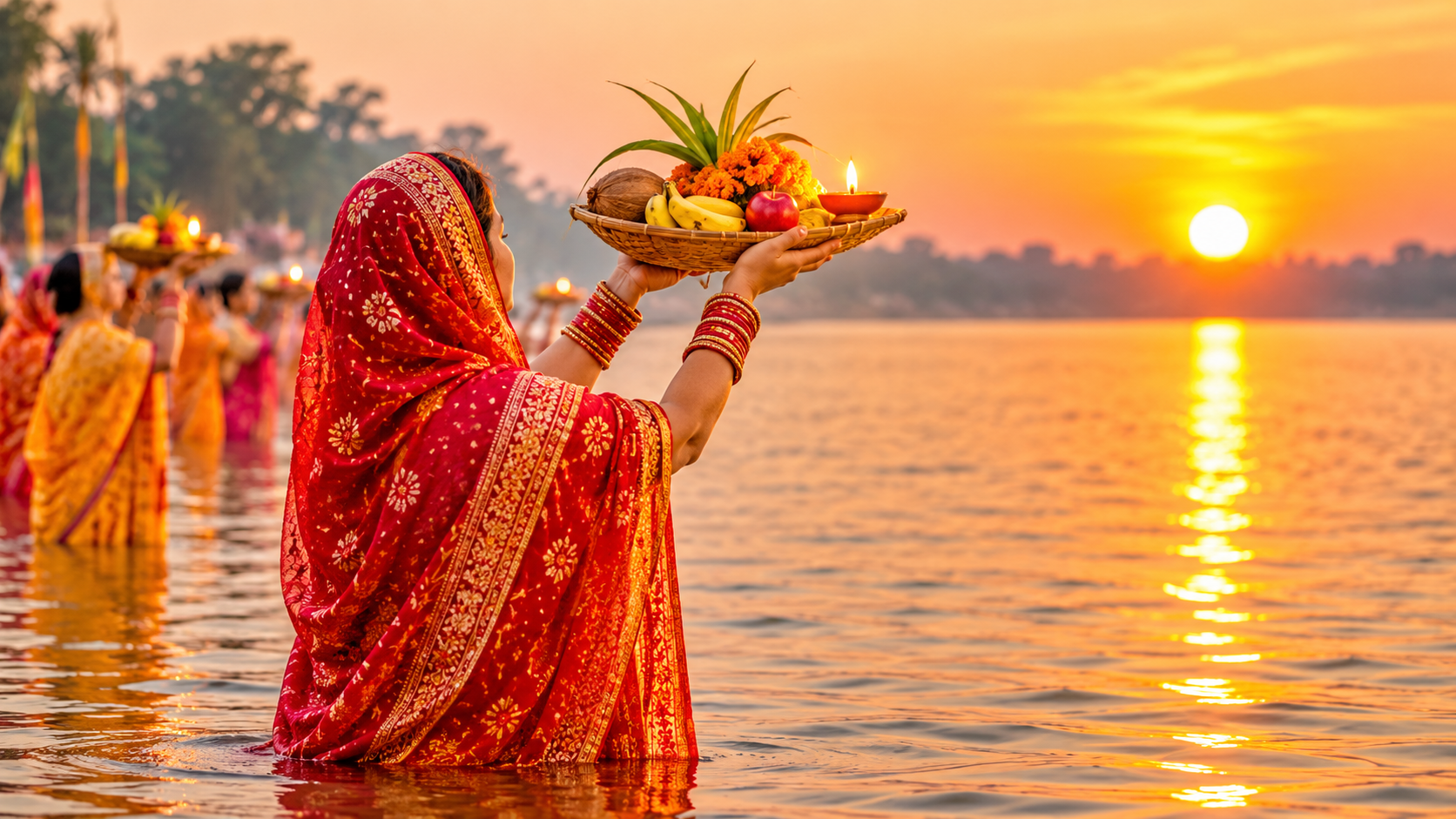
The four-day celebration of Surya Dev and Chhathi Maiya — exploring its demanding fasts, women's devotion, ritual purity, traditional offerings, folk songs and journey from the riverbanks of Bihar to communities around the world.
Chhath Puja is one of India's most distinctive festivals. Its most recognisable moment comes as the Sun approaches the horizon. Along riverbanks and ponds, devotees stand in the water, holding baskets filled with fruits, sugarcane and traditional offerings. Lamps glow. Folk songs fill the air. Families gather as prayers are offered to the setting Sun.
There is something unusual about this moment.
In many traditions, the rising Sun symbolises beginnings, hope and renewal. Chhath honours the setting Sun first. Only after this evening offering do devotees return before dawn to worship the rising Sun.
Between these two moments lies a demanding observance involving fasting, purification, household preparation, family participation and physical endurance.
Chhath is not simply a festival of prayer. It is a living cultural tradition in which devotion is expressed through discipline, food, water, music and community.
Deeply rooted in Bihar, Jharkhand and eastern Uttar Pradesh, the festival is now celebrated across India, Nepal and numerous international communities. Its traditions have travelled with families and generations, adapting to new surroundings while preserving their central rituals.
1. What is Chhath Puja?
Chhath Puja is a Hindu festival dedicated primarily to Surya Dev, the Sun God, and associated in popular devotional practice with Chhathi Maiya.
The word Chhath is commonly associated with Shashthi, meaning the sixth day of the lunar fortnight. The principal Kartik observance takes place on Kartik Shukla Shashthi, the sixth day of the bright fortnight in the Hindu month of Kartik. It is also known as Surya Shashthi, Chhath Parva and Dala Chhath.
The festival is especially significant in Bihar, Jharkhand and eastern Uttar Pradesh. It is also widely observed in parts of Nepal and by Indian diaspora communities.
Two major observances take place during the year:
- Kartik Chhath: Celebrated during Kartik, generally in October or November. This is the more widely observed celebration.
- Chaiti Chhath: Celebrated during Chaitra, generally in March or April.
Chhath is not confined to one morning or evening. It unfolds over four days, with each stage preparing devotees for the next.
The central rituals involve worshipping the setting and rising Sun, offering arghya with water, preparing traditional food, maintaining ritual cleanliness and observing a period of fasting.
Its distinctive character comes from the way these elements are brought together in a shared natural setting, often beside a river or pond.
2. Why is the Sun worshipped?
The Sun is essential to life on Earth. Its light and warmth influence seasons, agriculture, climate and the natural cycles on which living beings depend.
In Hindu religious traditions, Surya is much more than a celestial object. He is revered as a divine source of light, vitality, energy and illumination.
The Vedic tradition contains hymns addressed to solar deities. Rigveda 1.50, for example, praises Surya and his appearance in the sky. The Gayatri Mantra invokes Savitr, a solar deity associated with inspiration and illumination.
Solar worship therefore has a long and important place in Indian religious history.
Chhath gives this reverence a particularly distinctive expression. Rather than confining worship to a temple or household shrine, devotees gather in the natural landscape and offer prayers directly towards the Sun.
The festival also recognises the importance of water, which is central to its principal rituals. The setting and rising Sun are worshipped from the water's edge or while standing in the water.
The ritual brings together two essential elements of the natural world: sunlight and water.
3. Surya Dev and Chhathi Maiya: The two sacred presences
Surya Dev
Surya Dev is the principal deity worshipped during Chhath.
In Hindu tradition, Surya represents light, vitality, health and the sustaining power of nature. He is often depicted riding a chariot drawn by seven horses, with Aruna as his charioteer.
Solar imagery appears across Hindu religious literature, temple sculpture and devotional traditions. Surya worship has also been an important part of India's wider cultural and artistic heritage.
During Chhath, devotees offer arghya to Surya at sunset and sunrise, expressing gratitude and seeking blessings for well-being and prosperity.
Chhathi Maiya
Chhathi Maiya holds a central place in the popular devotional understanding of Chhath, particularly in Bihar and neighbouring regions.
She is associated with protection, motherhood, childbirth, children and family welfare. Her name invites a connection with Shashthi Devi, a goddess associated with the sixth day and with the protection of children in wider Hindu traditions.
However, the historical and religious identities associated with Shashthi have varied across regions and periods. Chhathi Maiya should not be reduced to a single uniform textual identity.
In the living tradition of Chhath, devotees invoke her alongside Surya Dev and seek blessings for family health, happiness and the well-being of children.
Together, these two sacred presences give the festival its distinctive devotional character.
4. The four days of Chhath Puja
The festival unfolds through four stages, each with its own rituals, preparations and significance.
Day 1: Nahay Khay — purification and preparation
The first day is known as Nahay Khay, combining the ideas of bathing and eating.
Devotees begin by cleaning their homes and preparing the place where ritual food will be made. Many take a ritual bath, often in a river or another water body.
Food preparation follows particular customs. Meals are generally simple and prepared with careful attention to cleanliness and the requirements of the observance.
Rice, pulses and seasonal vegetables are among the foods commonly prepared, although the exact menu varies between households and regions.
Nahay Khay marks the beginning of the festival's discipline. Household routines begin to change, and preparations are made for the fasting and offerings that follow.
Day 2: Kharna — the beginning of the demanding fast
The second day is known as Kharna, also called Lohanda in some traditions.
The devotee, known as the vrati, observes a fast through the day. In the evening, after preparing the ritual food and offering prayers, the fast is broken with a simple meal.
A traditional Kharna meal commonly includes gur ki kheer, a rice pudding prepared with jaggery, and roti. The food is first offered ritually and then shared as prasad.
Kharna is an important transition. After the evening meal, the principal vrati begins the longer and more demanding phase of the Chhath fast.
Day 3: Sandhya Arghya — offering to the setting Sun
The third day is the most visually recognisable part of Chhath.
Families prepare baskets of offerings and make their way towards rivers, ponds, lakes or designated ghats. The offerings may include:
- Thekua, a traditional sweet made with wheat flour and jaggery or sugar.
- Bananas and other seasonal fruits.
- Coconut.
- Sugarcane.
- Rice and other traditional food offerings.
- Flowers and lamps.
As sunset approaches, devotees enter the water or stand at its edge, facing the setting Sun to offer arghya—a ritual offering commonly made with water.
The gathering is accompanied by traditional songs dedicated to Surya Dev and Chhathi Maiya. The scene is striking: devotees standing in the water, families carrying baskets, lamps illuminating the riverbank and the Sun slowly disappearing beyond the horizon. For many families, Sandhya Arghya is the emotional centre of the festival.
Day 4: Usha Arghya — welcoming the rising Sun
The final day begins before sunrise. Devotees return to the water bodies while it is still dark, gathering with their offerings to wait for the first light.
As the Sun rises, devotees offer Usha Arghya, completing the central sequence of worship. The same Sun honoured at sunset is now welcomed as a new day begins.
Only after the morning offering does the principal fast come to an end, with the devotee performing parana—the ritual breaking of the fast—according to family and regional custom. The four-day observance is then complete.
5. The nirjala vrat: The physical discipline behind Chhath
One of the most demanding aspects of Chhath is the nirjala vrat.
Following the Kharna meal on the second day, the principal vrati begins a prolonged fast in which both food and water are traditionally avoided. In many customary observances, this continues for approximately 36 hours, until after the final morning offering.
This is not an ordinary fast. The devotee passes through the evening Sandhya Arghya, the night, early morning preparations and Usha Arghya without food or water, requiring immense preparation, restraint and determination, supported by the entire household.
The fast is understood by devotees as an expression of discipline, faith, commitment and prayer. Exact practices and duration may vary between households and individuals.
Health Note: The fast should be understood as a religious practice, not as a health recommendation. Prolonged abstinence from water can be physically risky, and people with medical conditions or other health vulnerabilities should seek medical advice before undertaking a strict fast. No one should feel compelled to risk their health.
6. Women devotees: The central role of the vrati
Chhath is often closely associated with women devotees. In many families, women have traditionally been the more common principal vratis, undertaking the demanding fast, preparing offerings, supervising household rituals and preserving folk songs and practices.
Their participation begins well before public offerings, encompassing household cleaning, food preparation, and arranging ritual materials. For many women, Chhath is an expression of prayer for the health, happiness and well-being of their children and families.
The festival's songs carry this emotional dimension, expressing a mother's hopes, devotion and relationship with Chhathi Maiya.
However, Chhath is not exclusively a women's festival; men also undertake the vrat and participate as principal devotees. Regardless of gender balance, women have played an instrumental role in sustaining the festival across generations through household practices, oral traditions, songs and collective preparation.
7. Ritual purity: Why preparation matters so much
Purity is one of the defining features of Chhath, placing intense emphasis on cleanliness in the home, kitchen, utensils, food preparation and ritual materials. This is an integral part of the festival's devotional discipline rather than mere tidiness.
In many households:
- The home is thoroughly cleaned before the observance begins.
- Kitchen spaces and utensils are washed and prepared with meticulous attention.
- Food for the vrat and prasad is handled according to strict household customs.
- Ingredients and cooking arrangements are kept simple and dedicated.
- Traditional offerings are prepared with care before distribution as prasad.
Families follow the principle of preparing at home whatever can be made there, supplementing it with fresh fruits, sugarcane, and coconuts brought from outside. The aim is simplicity, cleanliness, devotion and respect.
8. Thekua, bamboo baskets and the traditional offerings
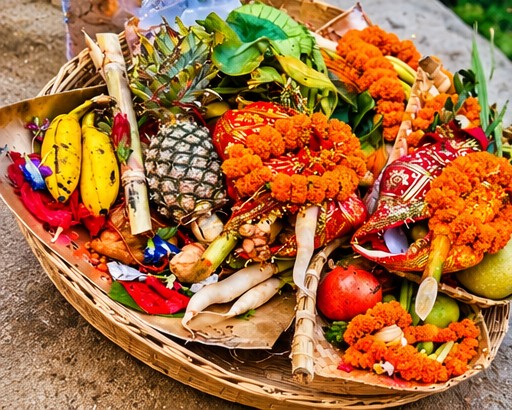
The material culture of Chhath connects the observance to regional agriculture, household traditions and everyday craft practices:
- Thekua: A signature sweet made using wheat flour, jaggery or sugar, and often ghee, shaped using traditional wooden moulds and cooked collaboratively within the household.
- Kheer: The jaggery-based rice pudding prepared for Kharna.
- Bamboo Baskets and Soop: Traditional bamboo winnowing trays and baskets used to arrange and carry offerings, linking the festival to rural craft skills and natural materials.
- Fruits and Seasonal Produce: Bananas, coconuts, sugarcane, and local seasonal fruits reflecting a deep relationship with agriculture and the environment.
9. Kosi Bharna: A distinctive night-time tradition
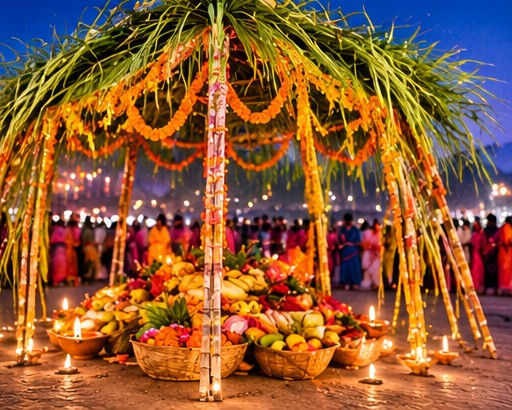
Among regional practices, Kosi Bharna involves building a canopy-like structure using sugarcane stalks, beneath or around which lamps and baskets of offerings are placed.
Associated with prayers, thanksgiving, and family wishes on the night of the third day after Sandhya Arghya, the sight of illuminated sugarcane structures adds a powerful visual dimension. However, it is a regional variation and not a compulsory part of every Chhath observance.
10. Chhath songs: The living voice of a tradition
Chhath is deeply auditory. Traditional songs transmitted orally across generations—primarily through women and family networks in Bhojpuri, Maithili, Magahi, and other regional dialects—form a cornerstone of its cultural heritage.
Their themes cover:
- Devotion to Surya Dev and Chhathi Maiya.
- Prayers for the well-being of children and families.
- The emotional and physical experience of fasting.
- Preparation rituals and journeys to the riverbank.
- Family relationships, separation, and homecoming.
- Gratitude and reverence for nature.
While modern recordings have expanded its reach, household singing and community participation remain vital to keeping the tradition alive.
11. Stories and legends associated with Chhath
Chhath is connected to several prominent narrative traditions, though they represent popular religious understandings rather than strictly verified historical origins:
- Karna and Surya Dev: Links the festival to Karna from the Mahabharata, known for his devotion to his divine father and performing solar worship while standing in water.
- Draupadi and the Pandavas: Connects the observance to Draupadi performing Surya worship during periods of hardship.
- Shashthi Devi: Links Chhathi Maiya to mother-goddess worship and child protection.
Historically, while ancient Indian reverence for the Sun is unquestionable in Vedic literature and temple architecture, the specific four-day format evolved through regional practices over centuries.
12. Chhath and the rivers: A relationship with nature
Water is central to Chhath's ritual identity. Gathering by rivers, ponds, and lakes connects families to cultural memory across generations.
Because this festival is fundamentally rooted in nature, maintaining ecological responsibility is vital. Devotees, organisers, and local authorities can protect these shared spaces by:
- Keeping ghats and access routes clean.
- Utilizing designated waste collection points.
- Avoiding plastic and non-biodegradable disposal in water bodies.
- Respecting water-quality and safety advisories.
13. When the river is far away: How Chhath adapts to city life
Migration and urbanisation have led communities far from natural rivers to develop alternative arrangements, including:
- Temporary pools in courtyards or community spaces.
- Artificial ghats and community tanks.
- Large water tubs or tanks arranged on residential terraces.
This adaptability demonstrates Chhath's cultural resilience—surviving not merely through geography, but through the collective memory and active participation of its practitioners.
14. From Bihar to the world: The global journey of Chhath
Migration carried Chhath from Bihar, Jharkhand, and eastern Uttar Pradesh to cities across India and international diaspora settlements in countries such as Mauritius, Fiji, Suriname, the United Arab Emirates, and the Netherlands.
For diaspora communities, Chhath serves as a powerful anchor for cultural identity, family history, and community bonding.
Furthermore, Chhath Mahaparva's growing global profile is underscored by the Government of India's nomination dossier submitted for consideration in UNESCO's cycle for the Representative List of the Intangible Cultural Heritage of Humanity. This nomination highlights that the festival's survival relies entirely on the people who continue to perform and transmit its living traditions.
15. What makes Chhath distinctive in India's cultural landscape?
Chhath is unique because it:
- Worships a visible, direct natural force (the Sun) rather than a temple icon alone.
- Honours both sunset and sunrise, acknowledging the continuity of natural cycles.
- Elevates discipline, fasting, and cleanliness as core components of celebration.
- Centres the household, translating domestic food preparation into a shared community experience at the water's edge.
- Travels seamlessly with migrating populations while retaining its core ritual sequence.
16. The deeper meaning of Chhath: Gratitude, endurance and continuity
Between thanking the setting Sun and welcoming the rising Sun lies a period of waiting, discipline, and faith. Chhath reminds humanity that life depends on forces beyond individual control—light, water, food, and seasons.
By placing gratitude at its core, encouraging household restraint, and uniting extended families through shared work, Chhath offers timeless lessons on environmental stewardship, resilience, and community harmony.
Conclusion: A prayer to the light that sustains life
As the setting Sun is honoured and the rising Sun welcomed, Chhath brings together devotion, discipline, family memory, and reverence for nature.
The riverbank may change, the city may change, and countries may shift, but families continue to gather, prepare their offerings, and wait for the Sun. First the setting Sun. Then the rising Sun. Decline and renewal held within the same horizon.
That is Chhath—not merely a festival of solar worship, but a living tradition of gratitude, endurance, family, and light.
Dishantra wishes everyone observing Chhath Puja a peaceful and blessed Chhath Mahaparva.
Editorial Note
Chhath's rituals and stories vary across regions, families, and devotional traditions. Mythological narratives presented in this article serve as popular religious traditions rather than independently established historical events. The approximately 36-hour nirjala fast describes a commonly followed principal observance, not a universal requirement for every participant. UNESCO nomination status refers to the Government of India's submission and should not be interpreted as formal inscription.